


Brush and Flow Coating: Rooted in History?
For thousands of years, craftsmen have faced a common challenge: how to protect wood from the damaging effects of weather, moisture, sunlight, and time.

The earliest documented wood preservation methods date to around 5000 BC, when the ancient Greeks applied olive oil to wooden structures and temple components to enhance their appearance and improve durability. The process was simple: coat the wood, allow it to absorb the oils, and brush away any excess.
Centuries later, the Norse and Vikings employed a remarkably similar technique when preparing timber for their ships. Wooden planks were soaked in protective oils and then brushed to evenly distribute the coating while removing any excess. This helped to improve the longevity of seafaring vessels that endured some of the harshest environments on earth.

While technology has advanced dramatically since those early days, the underlying principle remains unchanged: apply a coating, allow it to penetrate the wood, and distribute it evenly for maximum protection.
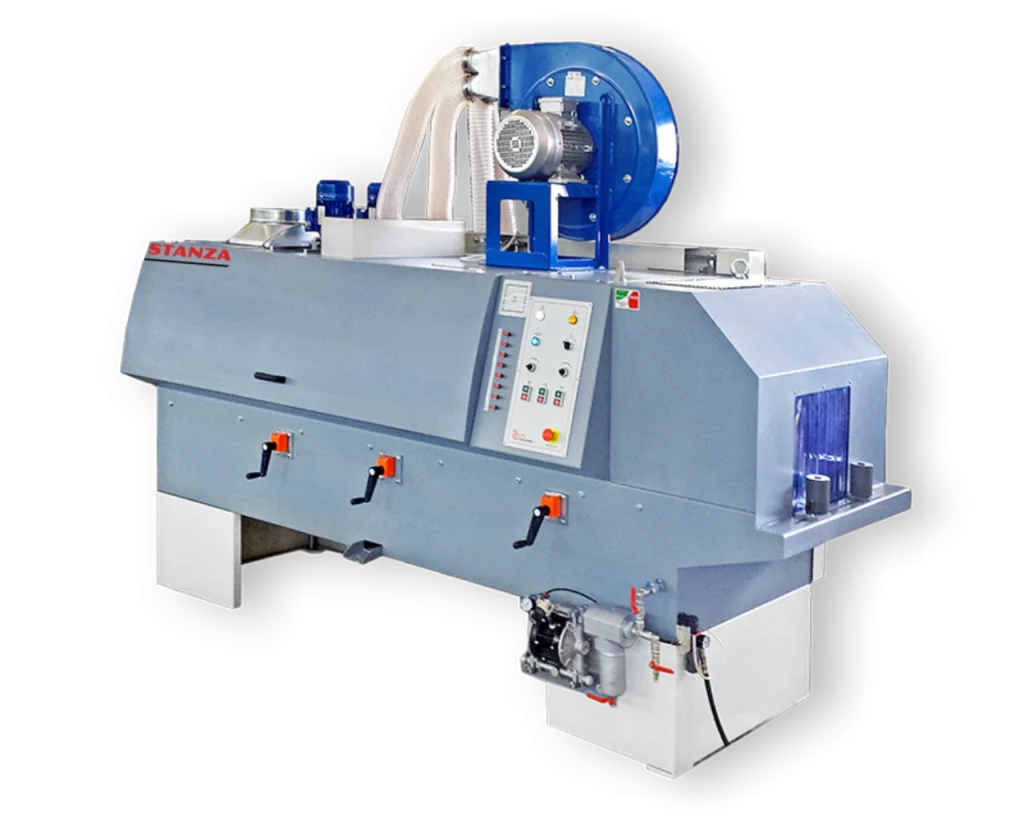
What is a Brush and Flow Coater?
The Brush and Flow coater is a specialized machine designed to apply stains, sealers, protectives, and other wood coatings quickly, consistently, and efficiently.
Unlike spray systems that atomize coating material, a flow coater floods or “flows” coating directly onto the surface of the wood. Excess material is then recovered and recirculated, making the process highly efficient while ensuring complete coverage of complex wood profiles.
Because the coating is allowed to flow over the entire surface before being brushed into the wood grain, the process is particularly effective for:
- Siding
- Decking
- Timbers
- Fence Boards
- Trim and Moulding Products
- Rough Sawn Lumber
- Textured Wood Profiles
In many regions around the world, flow coaters are commonly referred to as impregnation 1machines because of their ability to help coatings penetrate deeply into the wood surface.
- Impregnated wood is defined as wood that has undergone a process where low molecular weight resin is infused into its cell walls, resulting in the formation of an insoluble polymer that enhances its density, moisture resistance, and mechanical strength. ↩︎
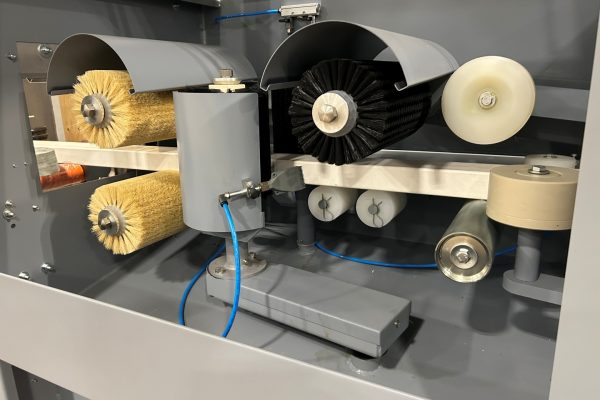
The Brush and Flow Coating Process
Click a heading to learn more about that specific step in the process.
Is this Method Right for Me?
The flow and brush coating process has become a preferred solution for many wood product manufacturers because it offers several significant advantages.
Exceptional Coverage
Since the coating flows over the entire workpiece before brushing, even complex profiles and textured surfaces receive consistent treatment.
Versatility & Affordability
A single machine can apply a wide variety of coating materials, including:
- Water-based coatings
- Solvent-based coatings
- Stains
- Sealers
- Preservatives
- Topcoats
This flexibility allows manufacturers to process a diverse range of products without needing to invest in multiple coating systems.
High Efficiency
The recirculation system captures excess coating and returns it to the application process, helping to reduce waste and improve efficiency.
Quick Setup and Changeover
Flow coaters are relatively simple to configure and operate, allowing manufacturers to move between varying products and coating types with minimal downtime.
Consistent Quality
By combining controlled application with mechanical brushing, manufacturers achieve repeatable results between items, maintaining quality standards across production runs.
A Proven Process for Modern Finishing
Today’s manufacturing environments demand higher production rates and tighter quality control than ever before, but the underlying principles of wood preservation remain surprisingly familiar.
Modern brush and flow coating takes this ancient practice and transforms it into a highly efficient and production ready solution for today’s wood manufacturers.
Whether you’re producing siding, decking, timbers, or specialty wood products, our Brush and Flow Coating systems provide effective penetration, coverage, efficiency, and consistency that has withstood the test of time.
To learn more about our Brush and Flow Coating solutions and to determine the best system for your application needs, contact one of our expert team members today!
SBC Brush and Flow Coater
Ensure uniform consistency and weather-proofing for maximum preservation of your finished product.