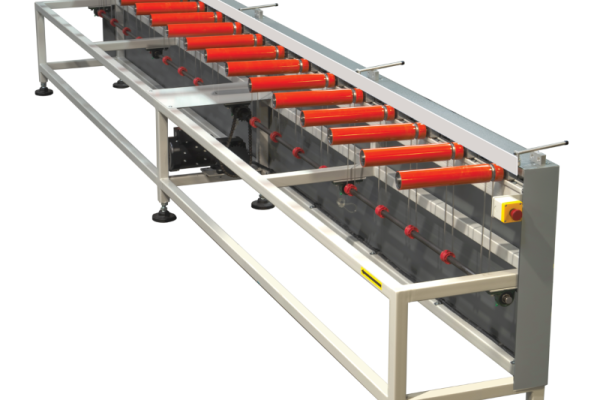
Spray coating, Vacuum coating, Roll Coating…they should all use similar material handling systems, right?
Well…not exactly. Let’s take a closer look at the two primary differences and their solutions:
360° Coating Coverage
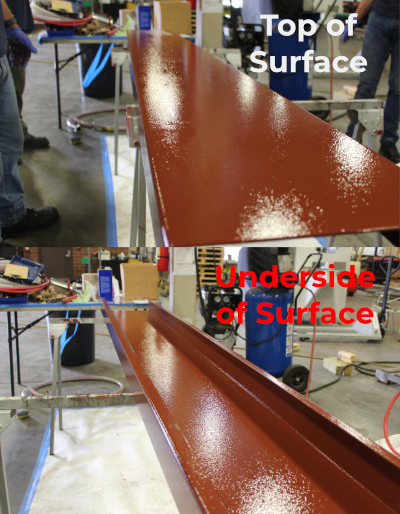
Vacuum Coaters are unique machines and desired in many instances because they are capable of applying coating a complete 360° around a cylindrical product or onto all 4 sides (top, bottom, and edges) of a more square/flat product.
This results in a workpiece that exits the machine with wet paint/finish on all surfaces that is unable to roll onto a conveyor without disturbing the bottom side and the now painted surface.
Since sprayed and roll coated finishes are applied to only 3 surfaces the workpiece can easily be transferred to roll or belt conveyors; there is no paint to disturb on the bottom.
See Solution #1 below for the answer to this.
For more information on vacuum coating, click here!
Push Feed
Unlike Sprayers or Roll Coaters, Vacuum coaters are “push feed” machines. A push feed machine (in this case a vacuum coater) moves a workpiece through by means of the piece directly behind it. This poses a very significant challenge to the most popular outfeed, the Lateral Conveyance system.
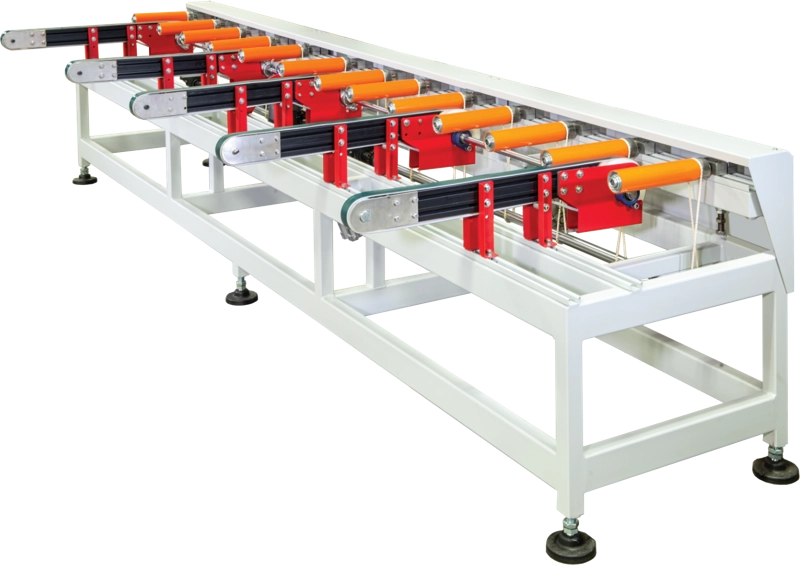
A lateral conveyance system transfers the workpiece perpendicularly (90°) to the vacuum coater exit, often into an oven to dry. This process requires a gap between workpieces to make the transfer successfully. This spacing gap can be quite significant, depending on the speed the board is traveling and the amount of time needed to make the 90° transfer.
For example:
In order to transfer a linear workpiece traveling at 300 fpm with a 3.5 second 90° transfer interval, there is a required spacing of at least 17.5′ between each workpiece.
However, the workpieces are butt to butt after exiting the vacuum coater due to the push feed. For the answer to this, see Solution #2.
Material Handling Solution #1
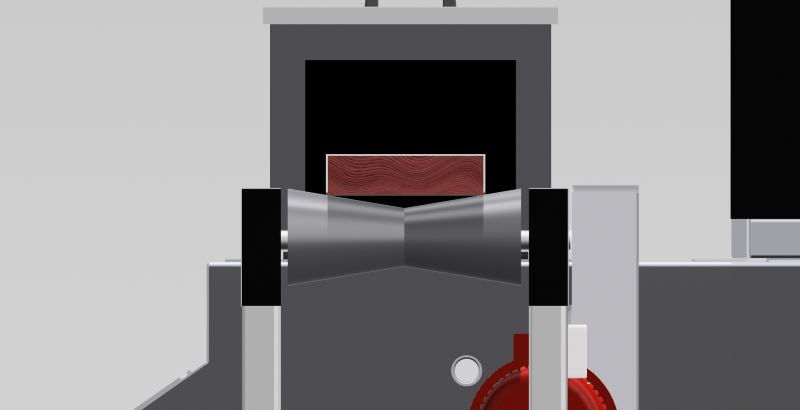
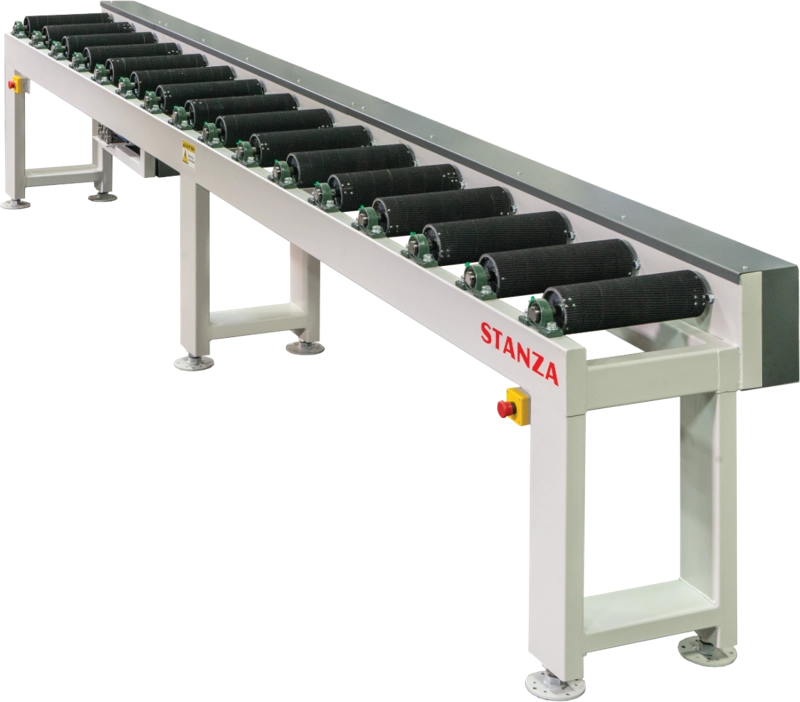
Use of Minimal Contact Roller Conveyor
This style of conveyor utilizes a tapered-center roller that contacts the edge points of the board in two places without disturbing the bottom painted surface.
Use of UV Curable Paints/Finishes
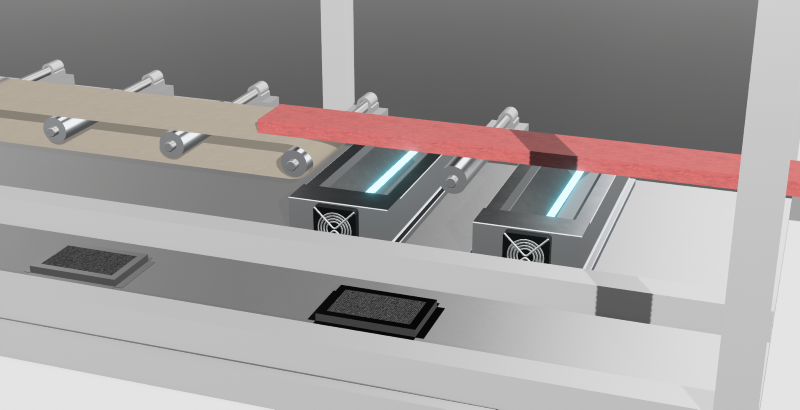
If this type of coating is appropriate for process, UV curable finishes allow for the bottom surface to pass over lamps that cure the finish prior to transferring onto a standard conveyor.
To learn more about UV curing methods, click here!
Material Handling Solution #2
Specialized Lateral Transfer
To remedy the timing and gap problems that can occur with push feed machine, we have designed a specialized high speed “roll-off” lateral transfer.
Our LTC Series Model H is designed to handle lateral transfers when presented with butt-fed workpieces. This model is featured in the video shown here:
Addition of Acceleration Conveyor
This style of conveyor pulls a gap to prepare for a standard lateral transfer, but adds significant length to the finish line, along with an additional machine and an increased cost.
To learn more about a custom-tailored solution to your specific application needs, contact a member of our Engineering Team today!